
African Countries × Japan

Japan’s Contributions to Global Food Security and the Food Supply in Africa Approaches to Building Sustainable Agriculture and Food Systems Initiatives for Business Expansion, Nutritional Improvement, etc. in Africa
Japan’s Contributions to Global Food Security and the Food Supply in Africa

01

Ensuring global food security
in partnership with the G7
and international
organizations

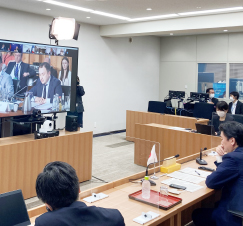
Taking part in an international discussion on food security
Taking part in an international discussion on
food security

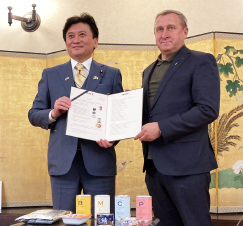
Food and other essentials delivered to Ukraine
Food and other essentials delivered to
Ukraine

Japan has been an active participant in ongoing discussions
on global food security at summits and ministerial level
meetings of the G7, G20, etc.

Japan is committed to building partnerships within and
outside the framework of the Global Alliance for Food Security
(GAFS) to overcome the global food security crisis triggered
by Russia’s invasion of Ukraine in 2022.

02

Dispatch of MAFF staff as
experts

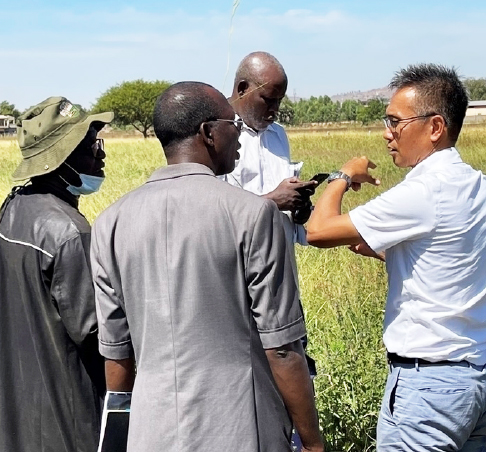
Gathering information related to a new project (Senegal)
Gathering information related to a new project
(Senegal)

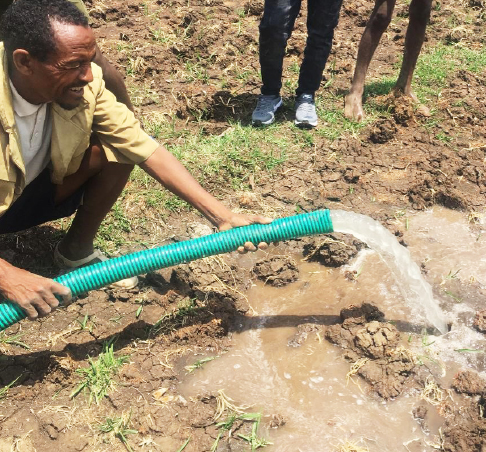
Demonstrating the use of a solar pump in rice irrigation (Ethiopia)
Demonstrating the use of a solar pump in rice
irrigation (Ethiopia)

MAFF staff are dispatched to different countries as JICA
experts to impart their expertise in “policymaking” and
“human-resource development” towards reducing reliance on
imported food, etc.

[Senegal]
Giving advice towards expanding rice acreage and production while promoting and
disseminating market-oriented agriculture and farming as a business.

[Ethiopia]
Helping to enhance rice productivity through seed quality improvement, the adoption of
farming equipment, etc. while facilitating information exchanges among stakeholders,
including private enterprises, and working to solve issues they face in common.

[Democratic Republic of the Congo]
The Congo Basin is facing severe threats of deforestation and forest degradation due to
the expansion of farmland, fuelwood production, and other consequences of rapid
population growth. To counter the threats, Japan is supporting the capacity
development of the DRC Government in the formulation and implementation of climate
change policies, including sustainable forest management and REDD+ processes.

03

Adoption of e-farming

Adopting a smartphone-based system

Building FVCs linked to Japanese products

Japan has been empowering smallholder farmer groups in
rural Africa (Senegal and Mozambique) by building a digital
platform for smartphones and other devices that enables them
to collect market information and regulate sales electronically.
The new platform, combined with the use of Japanese
products and services, strengthens food value chains and
increases the productivity and income of the farmer groups.

04

Strengthening food value
chains in partnership with
international organizations

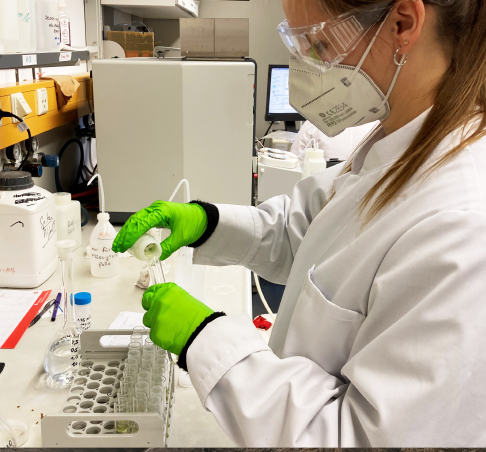
Measuring trace nutrients at a research partner institution, University of Giessen (Germany)
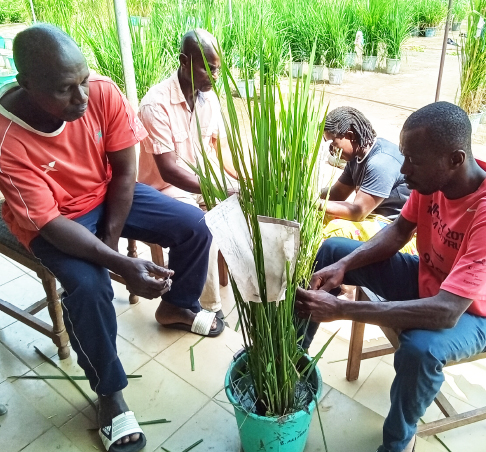

Cross breeding elite lines of rice

Africa Rice Center (AfricaRice), with assistance from MAFF,
aims to grow rice varieties that match imported varieties in
quality and market value by developing high-quality,
high-nutrition rice breeds through the crossing of various
genetic materials from Asian and African rice. The rice can be
cultivated by a newly developed low environmental-impact
farming method using inexpensive fertilizer co-products from
Ajinomoto (a manufacturer of amino acid seasoning) and
provided as an affordable staple food containing protein and
trace minerals (iron, zinc, etc.), nutrients that are often deficient in African diets.

05

Strengthening food value
chains in partnership with
international organizations

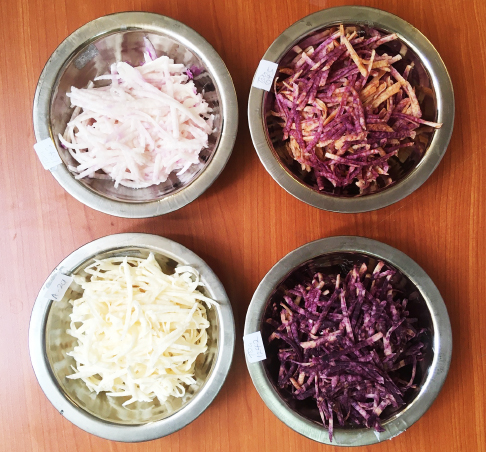
Selecting yam lines with high polyphenol content, etc.
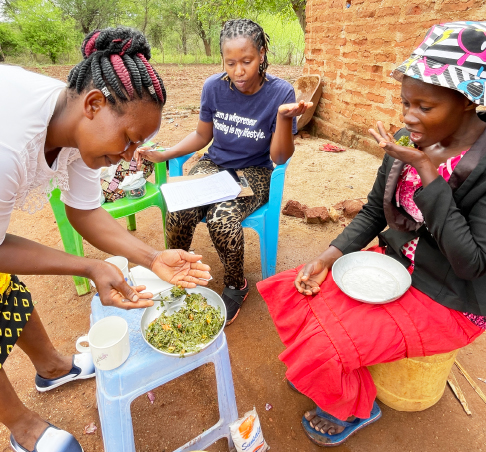

Nutrition and livelihood improvement through the use of locally grown crops

Financial assistance from MAFF has enabled the International
Institute of Tropical Agriculture (IITA) to develop more
productive farming techniques by selecting breeding materials
for fortifying yams and studying the use of plant
growth-promoting microbes.

IITA is developing breeding materials and techniques to
enhance the nutritional value of black-eyed peas, including a
simple method for assessing amount of folic acid and ACE
inhibitors which may contribute to blood-pressure-lowering.
New lines of black-eyed peas with higher protein and
polyphenol content are also being selected.

Japan has also funded a project for Alliance Bioversity
International and Centro Internacional de Agricultura Tropical
(CIAT) to improve nutrition and livelihoods in Africa through
developing a new integrated consumption assessment tool
(ADD‐IT: Agricultural Biodiversity and Dietary Diagnostic
Toolkit) that enhance use of local food resources.

06

Strengthening food value
chains in partnership with
international organizations

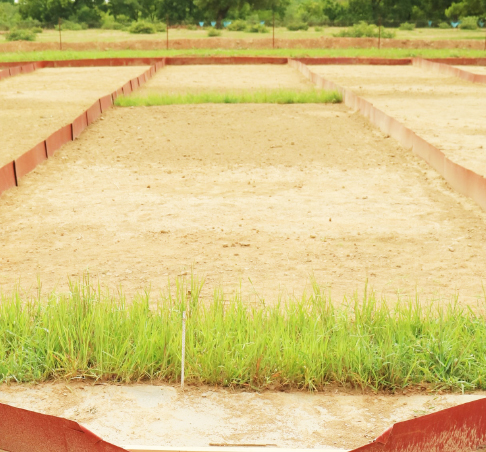
“Fallow Band System” to control desertification while improving crop production
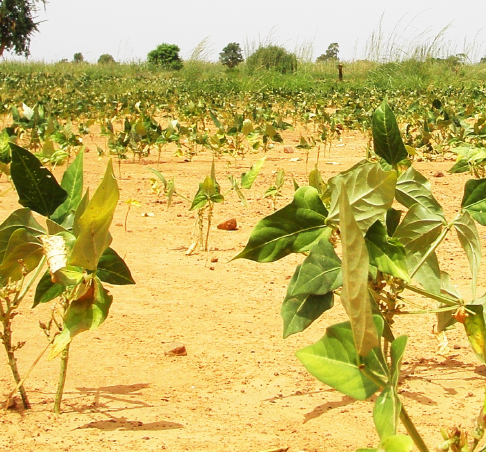

Black-eyed peas damaged by drought in degraded soil

Soil degradation not only reduces crop yields, but also causes
severe crop failure during droughts, which threatens food and
nutrition security in arid regions of Africa.

In collaboration with research institutions in Burkina Faso,
Japan International Research Center for Agricultural Sciences
(JIRCAS) is developing soil conservation technologies and
cultivation management methods that can be implemented by
smallholder farmers to reduce the risks of drought.